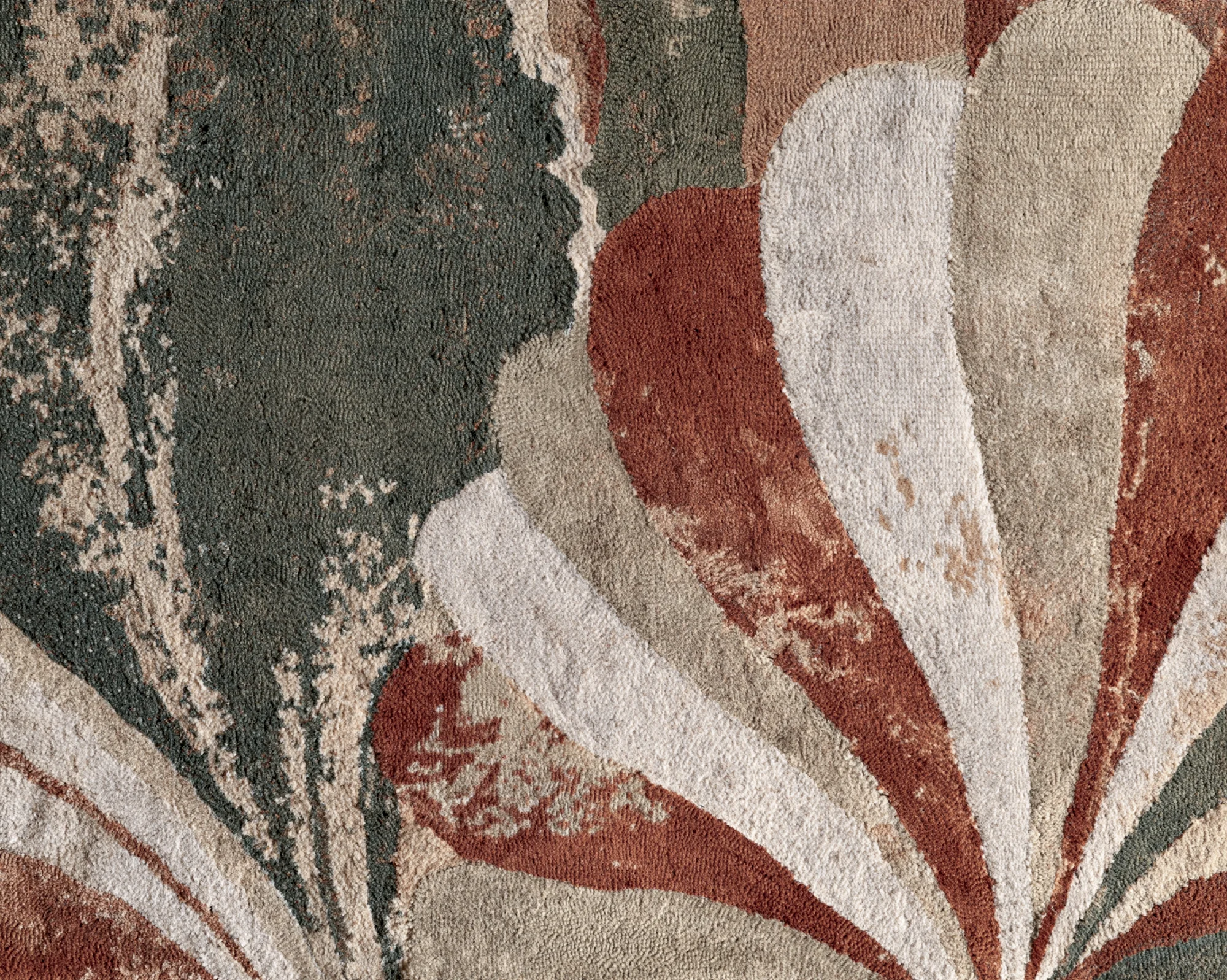
Everything else is fitted to something. A rug isn't.
As far as we are concerned, a rug has no given dimension.
And it doesn't sit in the room so much as arrange what's already there.
How much floor it takes is the first decision.
Not in centimetres — in ground. A small area under the table. Enough to hold the seating together. Generous. Almost the whole room. How much floor a rug claims changes the feel of the room before its colour or its pattern enters the conversation.
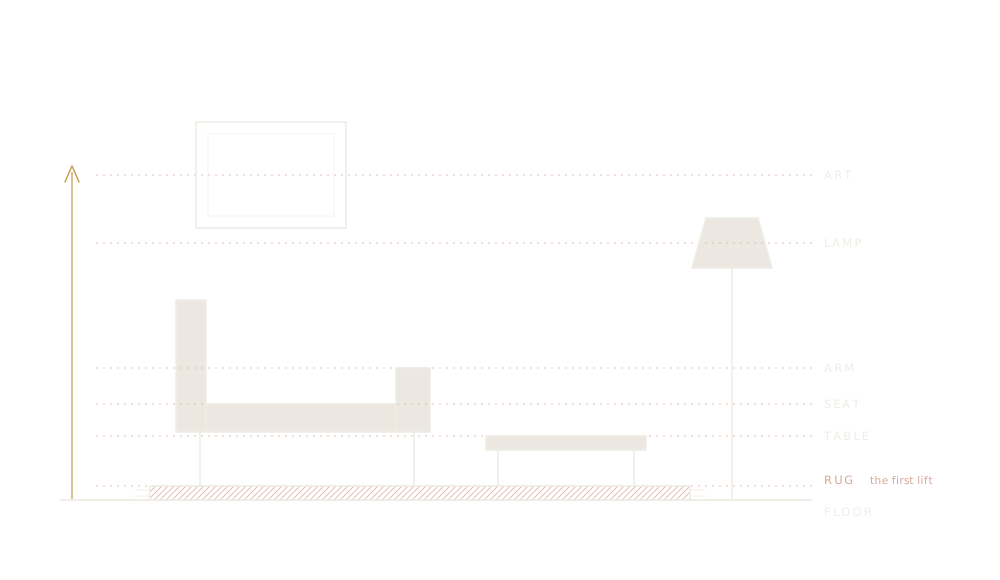
The first layer above the floor.
Rooms are built upwards as well as across. Floor, rug, seat, table, lamp — each one gives the eye another level to travel through, and the rug is the first lift off the ground.
It also changes what a room sounds like. Hard floors reflect sound; a rug softens those reflections, so a room can be made quieter without anything else in it changing.
One large thing, instead of five small ones.
Sometimes a room asks for less competition rather than more. A rug is large enough to carry colour or pattern on its own, which leaves everything above it free to stay quiet.
Two ways to have one made.
You can commission the kind that one person spends months knotting by hand, knot by knot. That allows fine detail, an edge and a surface that age rather than wear, and a life measured in decades.
Or the kind made by hand a different way — tufted rather than knotted. Quicker to make, easier to take to a large size, and more affordable for it.
Everything is made by hand. We don't carry machine-made rugs.
Show us the room.
A rug is usually the last thing we choose, because it answers to everything already in the room. It's among the first things we'd put down, because everything else then finds its place around it.