Blinds, where the window asks for something else.
Most windows, we'd dress with curtains. A blind is what we reach for when a window or a room needs something a curtain can't give — finer control of the light, and a treatment that stays contained: no cloth running to the floor, no stack spreading across the wall. Sometimes a blind replaces the curtain. Often the two share a window, the blind taking the light and the curtain the softness.
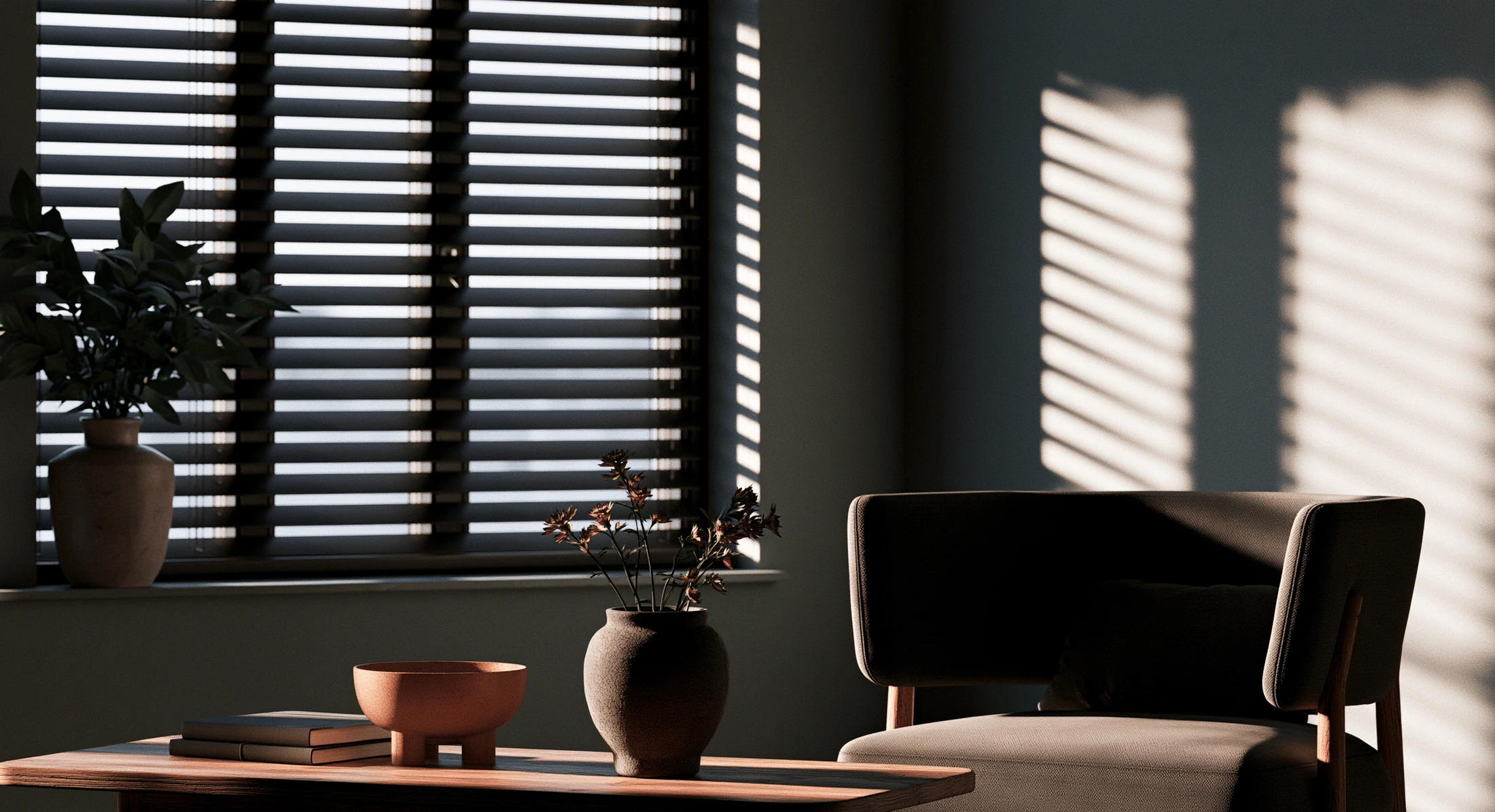
When a blind is the better answer.
In kitchens and bathrooms, where a treatment has to sit clear of splashes and steam and take being wiped down. On small or functional windows, and behind a sink or a desk a curtain can't reach. In tight rooms a curtain would crowd, on doors and openings a drawn curtain would block, and in clean, architectural rooms where you want the glass and the light rather than cloth.
And for anyone who wants finer control of the light — a light sleeper, a room full of screens, a hard afternoon sun — or whose taste runs to a contained treatment rather than an expansive one.
A blind is not chosen in isolation.
We start with the window — the opening, the light it receives, what you need from it, and how you want it to feel. From there we find the combination of material, treatment and mechanism that makes sense for that place. Some materials come in only one system; others take several forms.
What follows is what's available, and where each tends to earn its place.
Roller
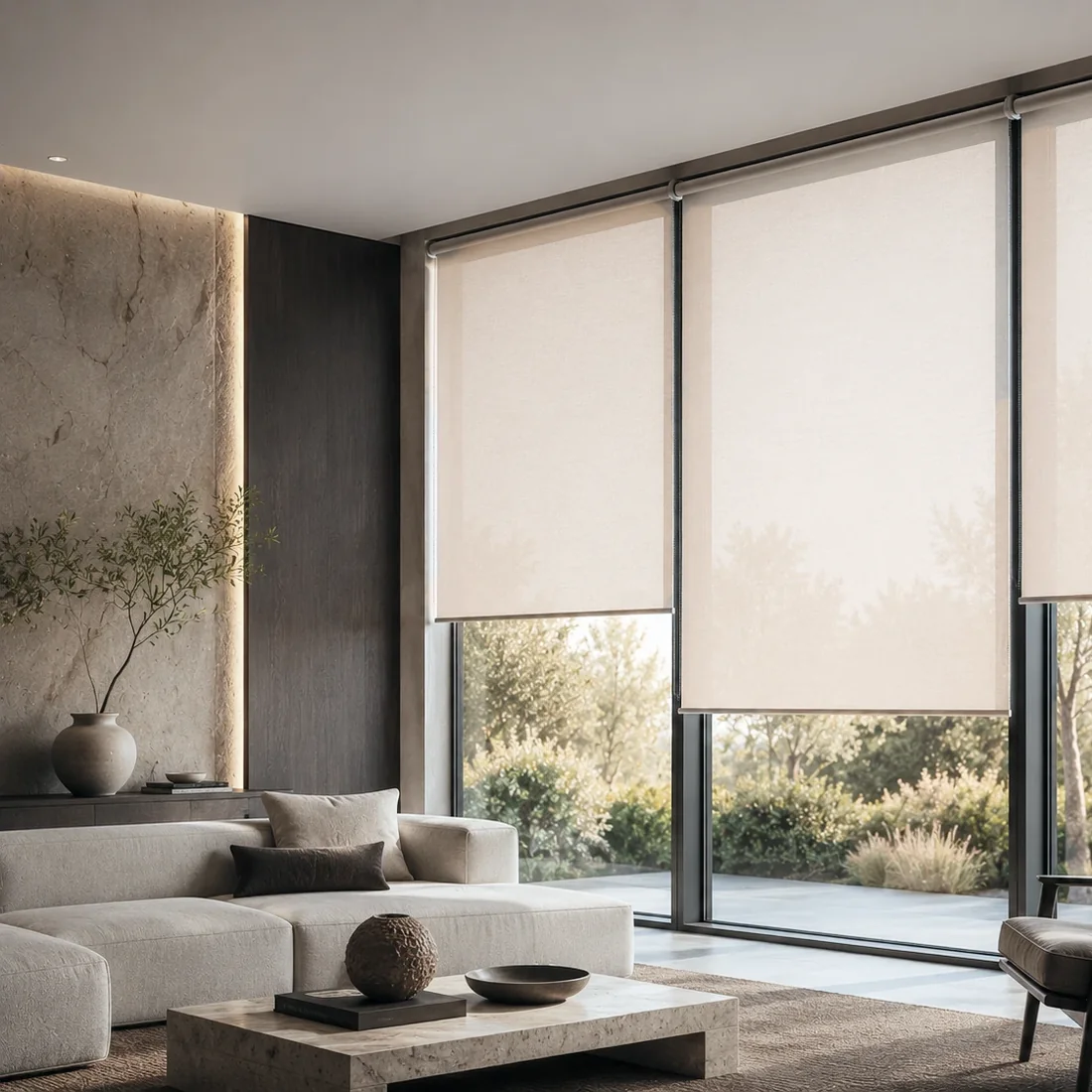
Roller blinds are simple and quiet. They're often chosen when simplicity and everyday practicality matter most, and work well where a clean, unobtrusive window treatment is preferred.
The choice is mostly the material — a sunscreen to cut glare while you can still see out, a sheer to soften the light, blackout to shut the room down, or a printed cloth if you want the blind itself to carry the pattern.
Roman
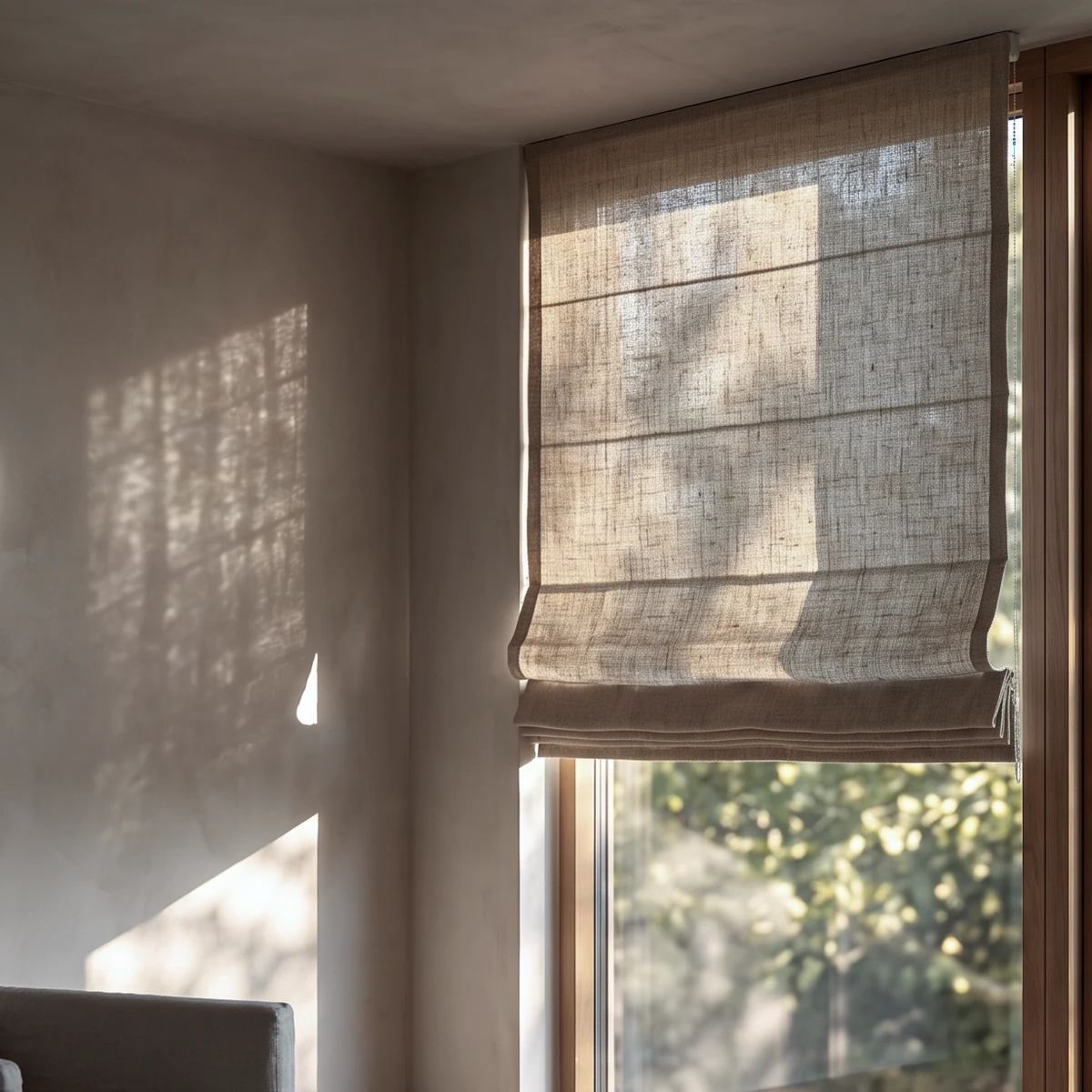
Roman blinds bring material closer to the window. They keep much of the softness of curtains while taking up less space, though the folds gather into a stack at the top when the blind is raised.
Venetian
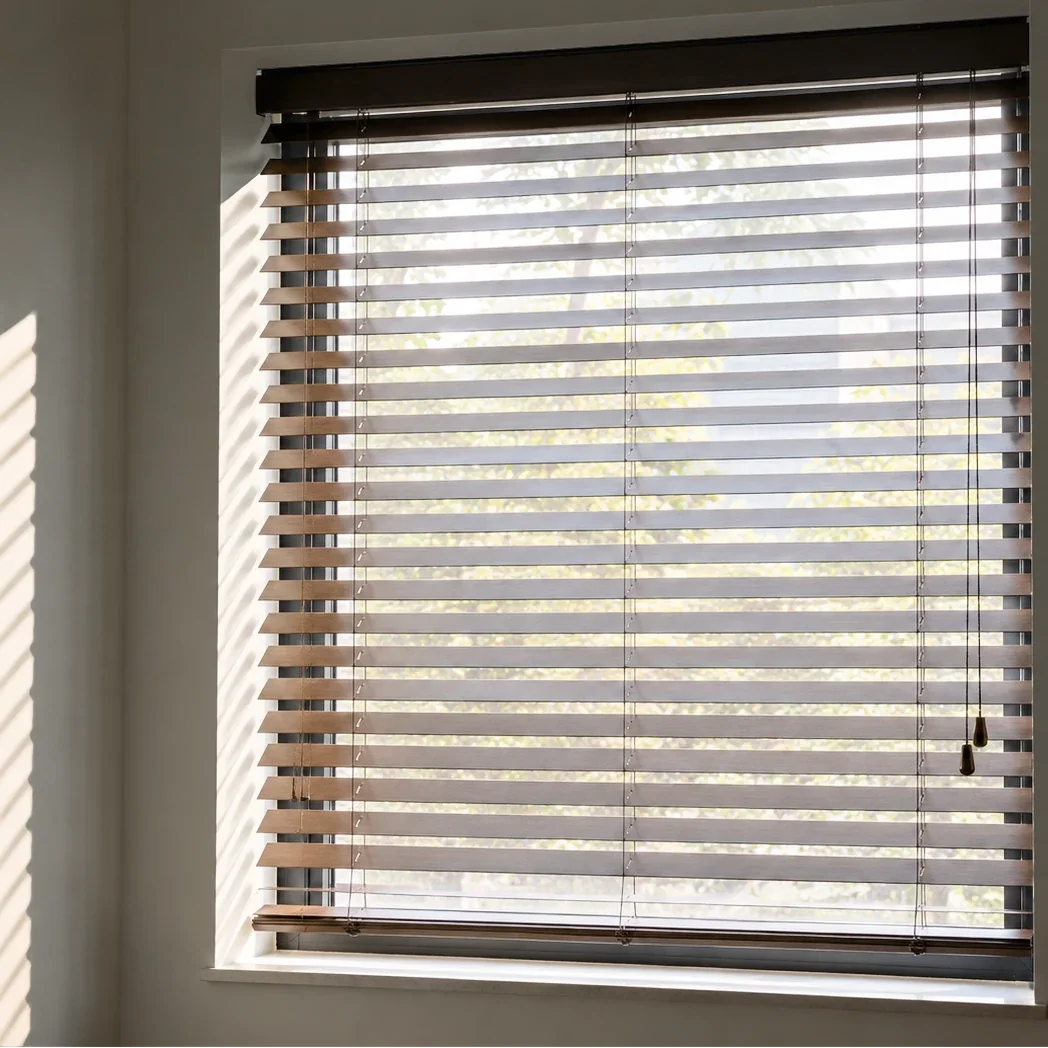
Venetian blinds let you set light and privacy without raising the blind at all. They suit rooms where the light shifts through the day and you'd rather adjust it than shut it out.
Ours are wooden — the grain and warmth become part of the look, which is why they sit well in living rooms and studies.
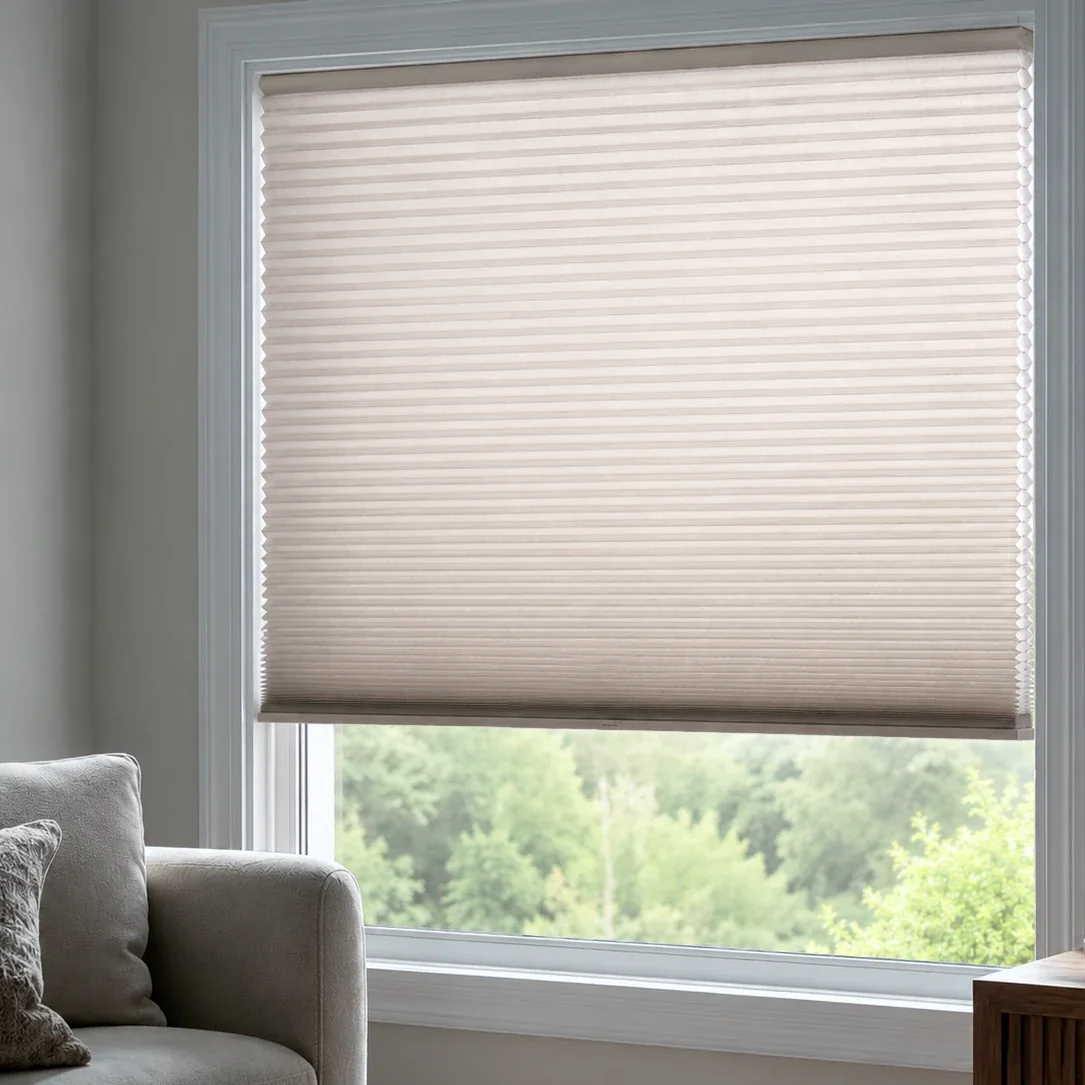
Honeycomb
Honeycomb blinds help keep harsh heat out, making rooms more comfortable and easing the load on air conditioning. Their cellular construction also softens outside noise, making them especially useful for bedrooms, and rooms that take hard afternoon sun or face a busy street.
Made light-filtering, blackout, or as a twin configuration combining both in one blind — daylight through the day, dark for sleep.
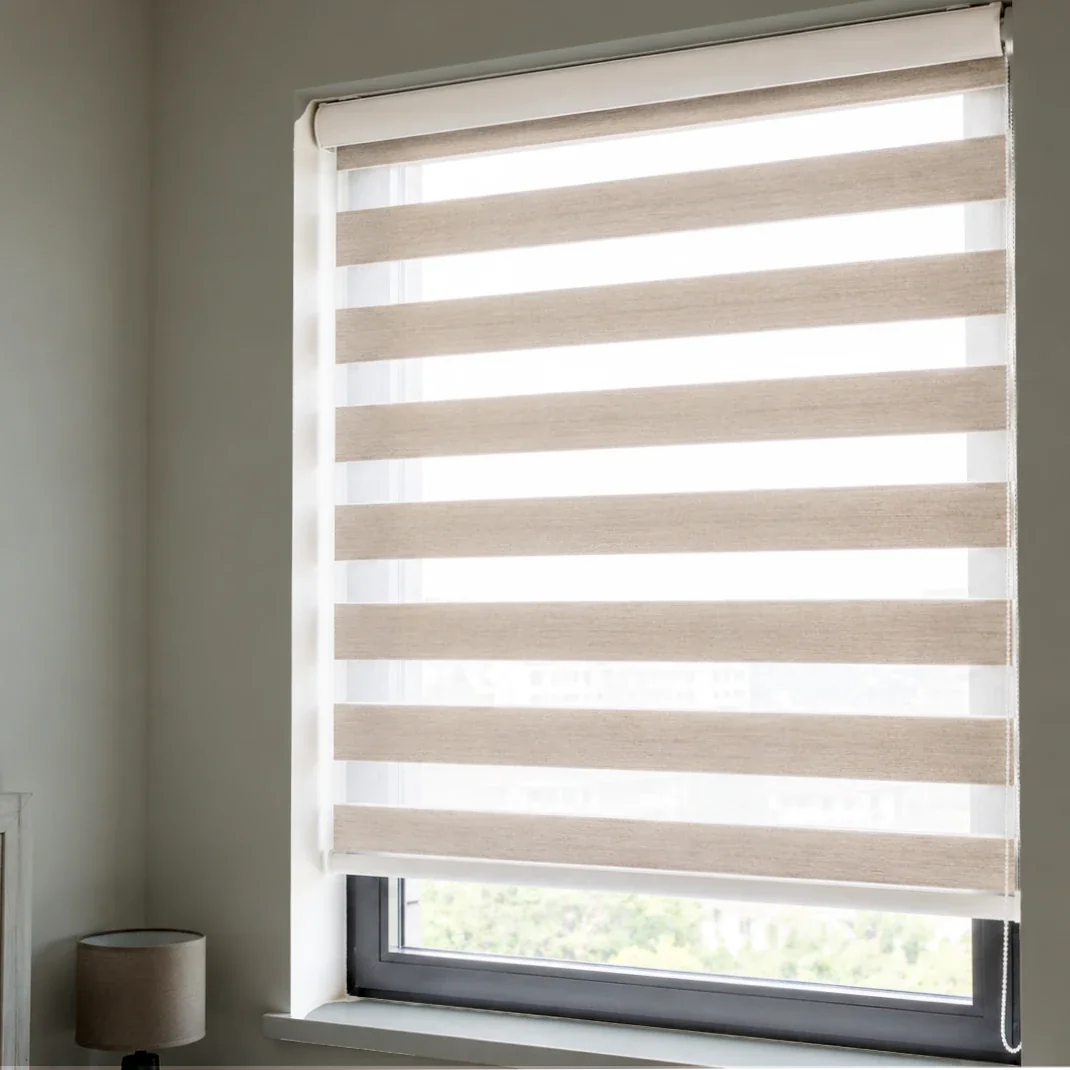
Zebra
Zebra blinds shift between a clear view and greater privacy as the bands line up or part. They let you tune the light through the day without raising the blind at all.
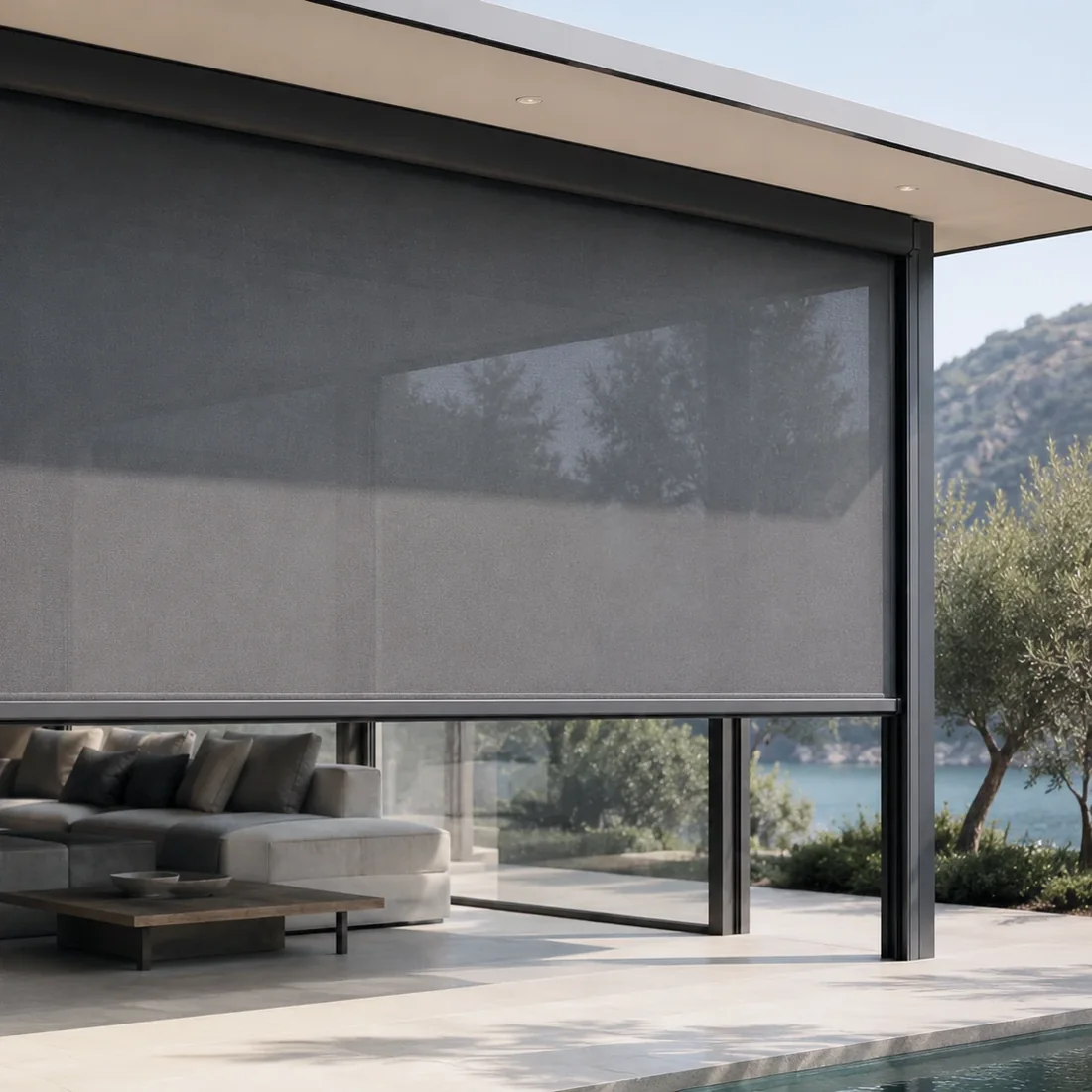
Outdoor
Outdoor blinds cut the sun, wind and rain coming into a balcony or verandah without walling it in, so the space works through more of the year. How much they hold off depends on the system and how exposed the opening is — a zip system seals at the edges; a monsoon blind is built for the rain.
Motorised
Motorised blinds are less about technology than convenience. They earn their place on tall windows, hard-to-reach openings, and rooms where the light changes a lot through the day. Available across most of the types above.
A blind is judged on its fit.
Up close, the difference between a good blind and a cheap one is a series of small alignments. Whether it sits square in the opening. Whether it rises evenly and stops where you set it. Whether the slats and folds stay level as they gather — every blind but a roller leaves a stack, and a good one is even and where you expect it. How neatly the mechanism meets the frame or the wall. What counts shifts from one system to another, but imprecision shows in all of them. None of it shows in a photograph. All of it shows on the wall.
Built on the Toso system.
A blind is only as good as its mechanism and its measure — the way a curtain is only as good as its hem and its lining. We build on Toso systems, chosen for precise operation and serviceable mechanisms, and measure each blind so it sits square in the opening and the light gap is held as close as the window allows.
We come to you.
We visit with the catalogues and samples, so you can see and handle the materials in your own light. Together we look at what the window needs and go through the combinations of material, treatment and system open to it. Once the direction is clear, we measure and settle the fit — because that turns on what doesn't show on a screen: how the window opens, how deep the recess runs, how wide the span, and how the room is used.
Tell us the window, and we'll take it from there.
A visit is the quickest way in — we'll bring everything to see and handle, and measure while we're there.